
How to Throw a Boomerang: Complete Beginner Guide (2025)
Master the art of boomerang throwing in your first session. This step-by-step guide covers the physics, grip, stance, throwing technique, and common mistakes — everything a beginner needs to get that satisfying return flight.
Published May 30, 2026
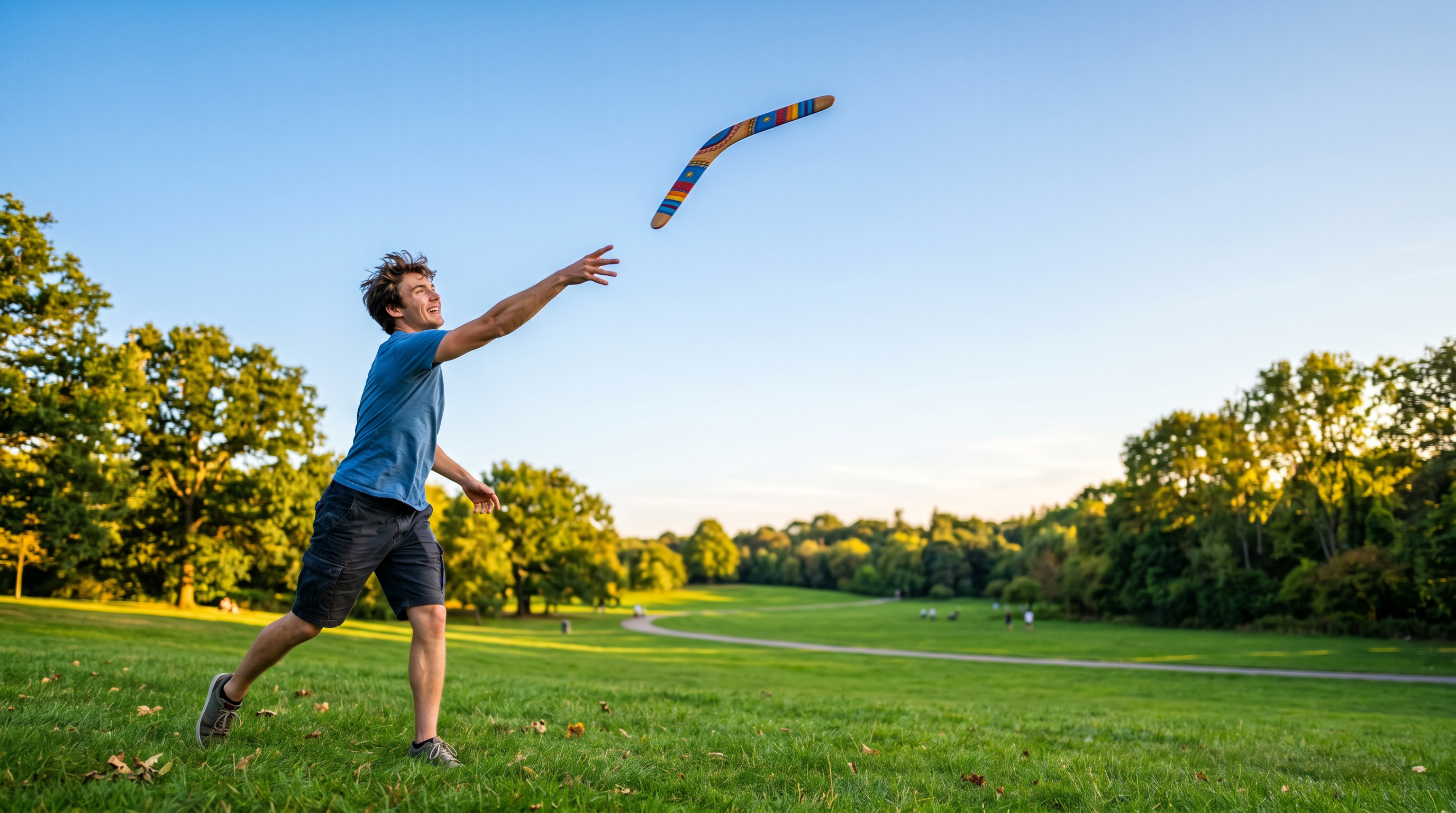
How to Throw a Boomerang: Complete Beginner Guide (2025)
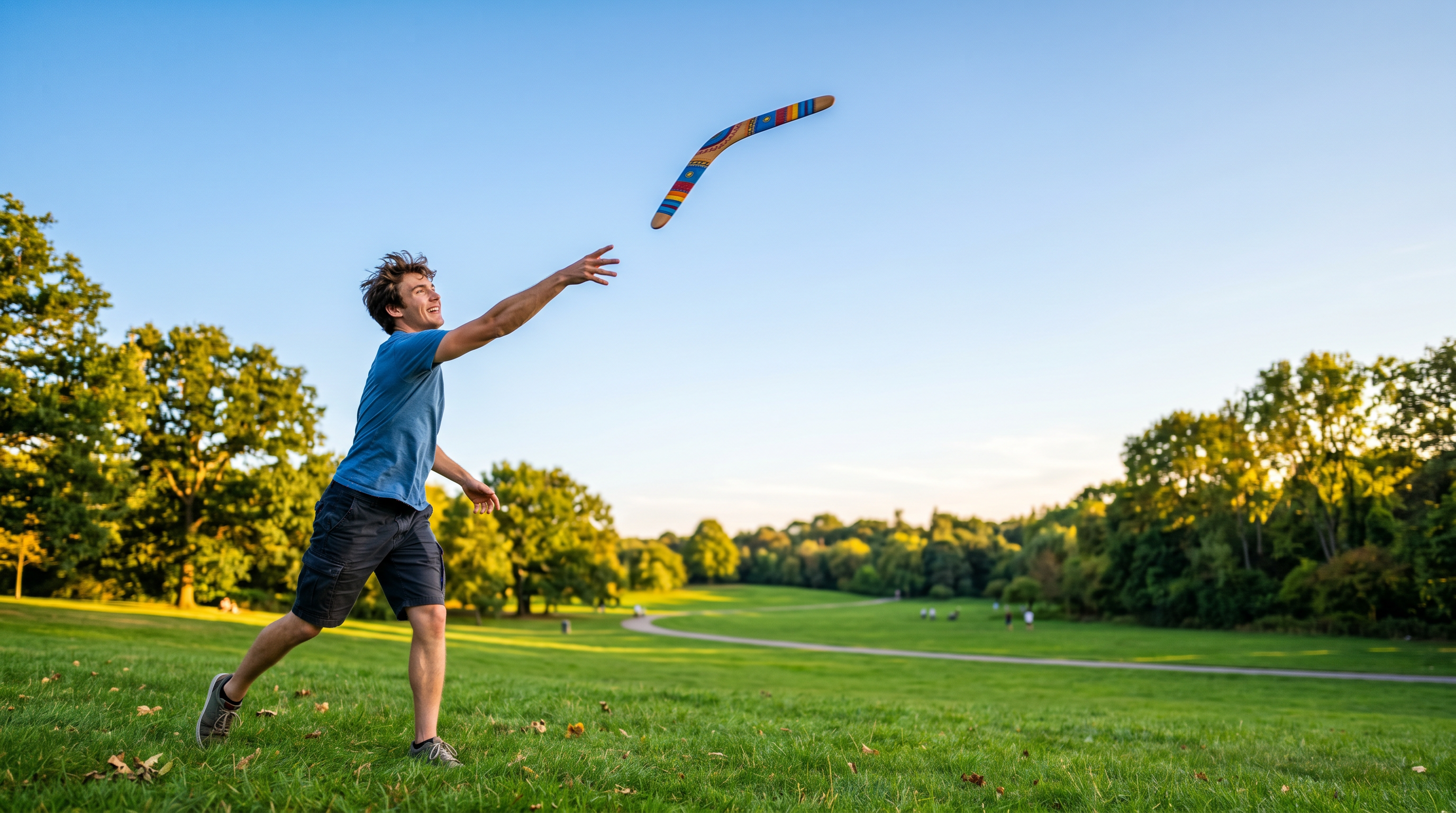
Master the art of boomerang throwing in your first session with this step-by-step guide.
Introduction: Why Boomerangs Are the Perfect Outdoor Hobby for 2025
In a world dominated by screens, boomerangs offer something truly magical — a flying object that comes back to you. Whether you're a parent looking for a fun outdoor activity for the kids, or an adult rediscovering the joy of play, boomerang throwing is one of the most satisfying skills you can learn in 2025. It combines physics, coordination, and the great outdoors into one unforgettable experience. Best of all, you don't need any special equipment or training ground — just a wide open space and the right technique.
Section 1: Understanding Boomerang Physics — How the Spin Creates Lift and Return Flight
Before you throw your first boomerang, it helps to understand why it comes back. A boomerang isn't magic — it's science.
A boomerang is essentially two wings joined together. When you throw it with a spin, each wing acts like an airplane wing, generating lift through the Bernoulli principle. The top wing (moving forward relative to the spin) generates more lift than the bottom wing. This creates an imbalance — and here's the clever part: because the boomerang is spinning (gyroscopic effect), this imbalance doesn't flip it over. Instead, it causes the flight path to curve in a circle, bringing it back to the thrower.
Key physics at play:
- Bernoulli Lift — curved wing profile generates upward force
- Gyroscopic Precession — spin converts lift imbalance into circular flight
- Angular Momentum — keeps the boomerang stable during flight
Section 2: Choosing Your First Boomerang
The right boomerang makes all the difference for beginners:
| Type | Best For | Range | Price |
|---|---|---|---|
| EVA Foam | Absolute beginners, kids | 10–15m | $5–$15 |
| Lightweight Wood | Intermediates, teens | 20–30m | $15–$30 |
| Carbon Fiber | Advanced, competition | 40m+ | $40+ |
Our recommendation for beginners: Start with an EVA foam tri-blade boomerang. It's forgiving, safe, and still returns reliably when thrown with basic technique. You can always upgrade to wood once you've mastered the fundamentals.
Section 3: Step-by-Step Throwing Guide
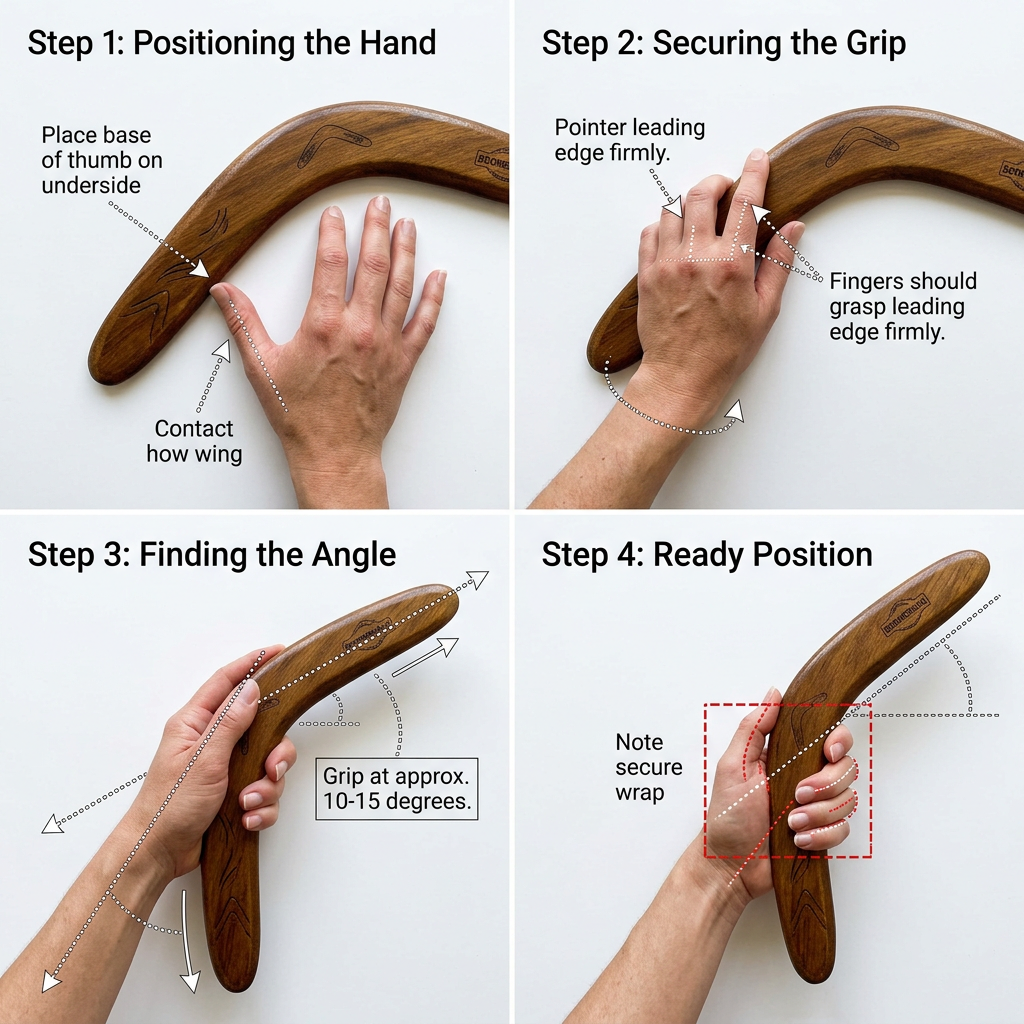
Correct pinch grip: thumb on flat side, index and middle fingers on the curved side, wing tilted 20° from vertical.
1. The Grip
There are two main grips:
- Pinch Grip (recommended for beginners): Hold the boomerang at the tip of one wing with your thumb on the flat side and your index/middle fingers on the decorated (curved) side.
- Power Grip: Full palm wrap — more control for stronger throwers.
2. The Stance
- Stand with your shoulder pointing into the wind (not facing the wind — 45° to 90° off-center).
- For right-handers: aim slightly to the right of the wind direction.
- For left-handers: aim slightly to the left.
3. The Arm Motion
- Raise the boomerang above your ear, tilted at about 20° from vertical (not flat like a frisbee).
- Step forward with your opposite foot.
- Swing your arm forward in a smooth overhand motion, like throwing a baseball.
- At the release point, snap your wrist to add spin.
4. The Release
- Release when your hand passes your ear.
- The boomerang should be tilted slightly inward (10–20° from vertical), NOT flat.
- Follow through with your arm pointing at your target.
Section 4: Common Mistakes & Fixes
| Mistake | What Happens | Fix |
|---|---|---|
| Throwing flat like a frisbee | Boomerang flies away and doesn't return | Tilt 20° from vertical at release |
| Ignoring wind direction | Unpredictable flight path | Always throw 45° into the wind |
| Too much force | Boomerang flies too far, overshoots | Use 60–70% of max strength |
| Wrong grip | Boomerang wobbles or tumbles | Practice pinch grip at home first |
Section 5: Best Practice Locations
Choose your practice spot wisely:
- Open parks with short grass — best for beginners (soft landing, easy retrieval)
- Beaches — great wind, soft sand, wide open space
- Sports fields — football or soccer fields have ideal dimensions
- Avoid: Wooded areas, near roads, crowded spaces, or overhead power lines
Ideal conditions: 5–15 mph wind, flat terrain, no obstacles within 30m radius.
Ready to Start Your Boomerang Journey?
The best way to learn is to just go throw. Grab a beginner-friendly boomerang, find a park, and practice — you'll have your first successful return within 15 minutes of reading this guide.
Shop Our Beginner Boomerang Collection →
Free US shipping · Gift wrapping available · Satisfaction guaranteed
Ready to get started?
Explore the boomerangs mentioned in this guide and checkout securely with Stripe.
Shop now →More guides

Boomerang Guide
The History and Science of Boomerangs: From Ancient Tool to Modern SportDiscover the 20,000-year journey of humanity's original flying machine — from Aboriginal hunting grounds and pharaoh's tombs to World Championship arenas. Includes the fascinating physics behind why boomerangs actually return.

Boomerang Guide
7 Best Outdoor Gift Ideas for Active Families (Summer 2025)Skip the screens this summer and give the gift of outdoor adventure. From boomerang starter sets to lawn games, here are 7 active family gifts that get everyone moving, laughing, and making memories together.
Boomerang Guide
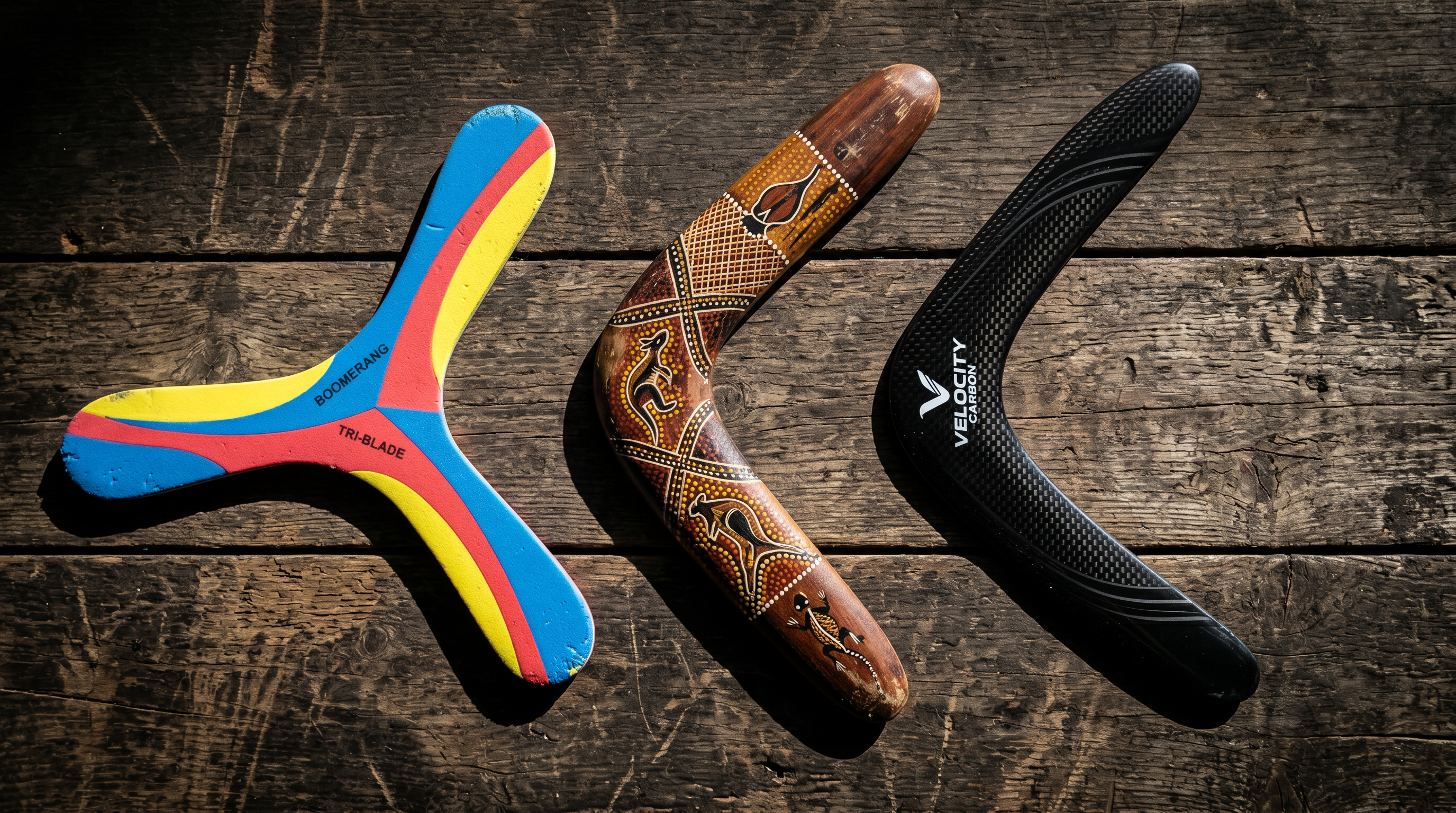
Boomerang Buying Guide: Foam vs Wood vs Carbon Fiber — Which Is Right for You?Not sure which boomerang to buy? This complete guide compares EVA foam, wooden, and carbon fiber boomerangs across price, performance, safety, and skill level — with a clear decision matrix to find your perfect match.